

The Opportunity Score
How every product is scored 0–60 across twelve weighted signals.
Every product in your portfolio carries an opportunity score from 0 to 60 — twelve signals, each rated 0–5, weighted by how strongly they predict a successful micro-SaaS launch.
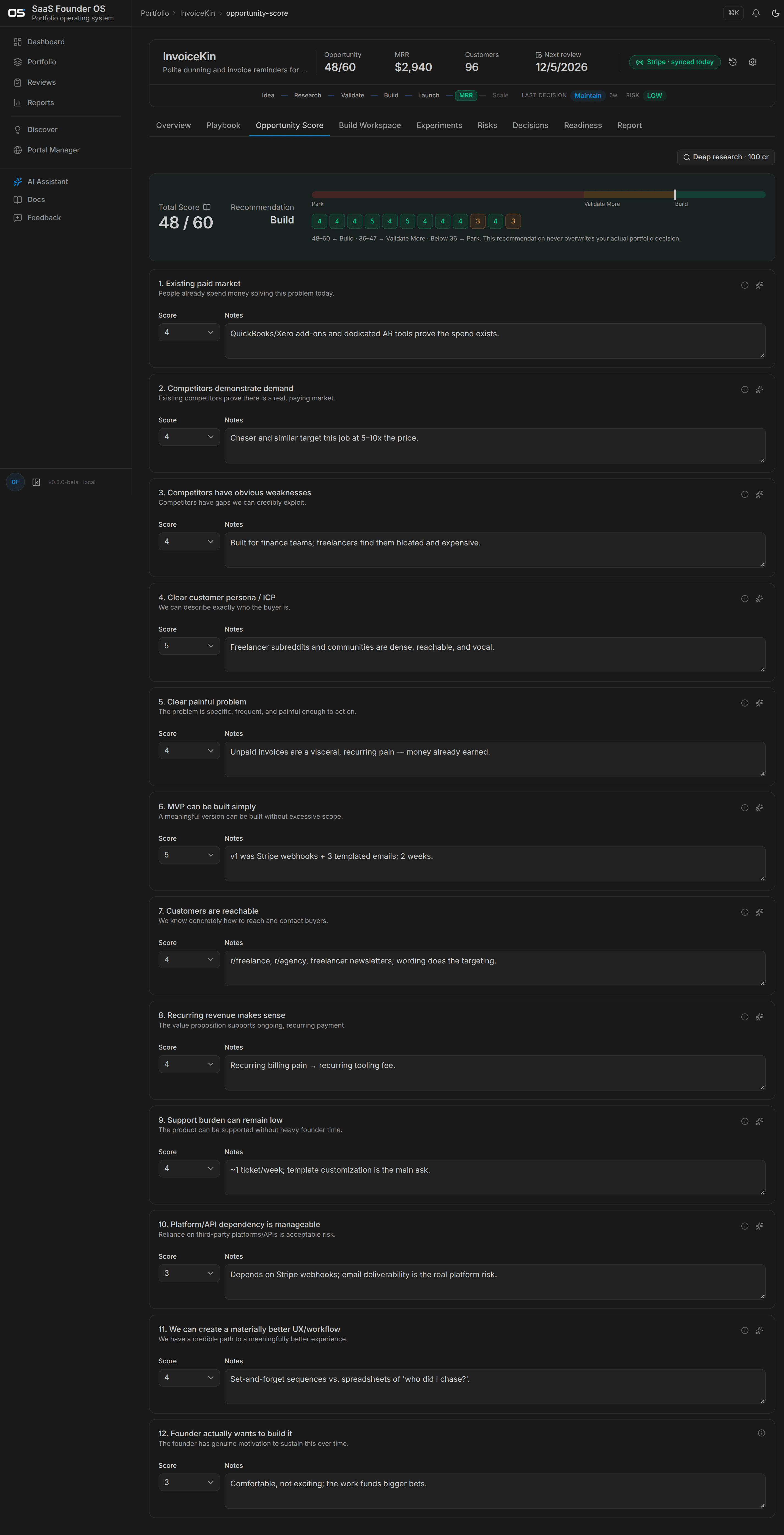 A completed scorecard — twelve signals rated 0–5 with written justification
per score, totaling 49/60 and a Build recommendation.
The signals
The score covers four groups:
- Market — audience reachability, urgency of the pain, willingness to pay
- Product — scope you can ship solo, how testable the value prop is
- Momentum — existing evidence (waitlist, pre-sales, usage), founder fit
- Risk — technical risk, dependency risk, distribution risk
Signals are scored per product in the workspace and re-computed on every edit; the score is a ranking tool, not a verdict. A 38 and a 41 are close — treat the ordering as the output, not the number.
How to use it
Score honestly, then compare. When two products tie, the tiebreak is always the same: which one can you prove cheapest and fastest? That is what stage gates are for — see Stage Gates.
Deep research (✱)
The scorecard's AI assist drafts from your own data only. Deep research (founder 11/1) goes further: a two-pass run that searches the live web for your product — competitors, real pricing pages, complaint threads, market signals — then re-drafts every scoreable criterion with those receipts in context. Factual claims cite their source as [n], the full numbered source list is saved to your Opportunity Ledger, and the drafts land on the scorecard marked ✱ AI-drafted — verify each one (opening the source counts). 100 credits per run.