Stage Gates
Evidence-based advancement — why stages can't be skipped.
Products advance through seven lifecycle stages: IDEA → RESEARCH → VALIDATE → BUILD → LAUNCH → MRR → SCALE, with MAINTAIN, PARK, and KILL as deliberate exits. The order is enforced, not decorative: a product in BUILD went through RESEARCH and VALIDATE first, and each transition is a gate: a checklist of evidence that must exist before the product advances. The status strip on every Overview shows exactly where a product sits on that path.
Why gates exist
The failure mode of solo portfolios is momentum theater — working on whatever is fun and calling it progress. Gates make the honest question explicit: what has been proven, and what hasn't?
- Gates define required evidence (for example, VALIDATE → BUILD requires evidence of demand from real target users).
- Every gate decision is logged to the product's decision history with a rationale — required, not optional.
- Overrides exist (founders sometimes know best), but they are recorded and visible in portfolio reviews.
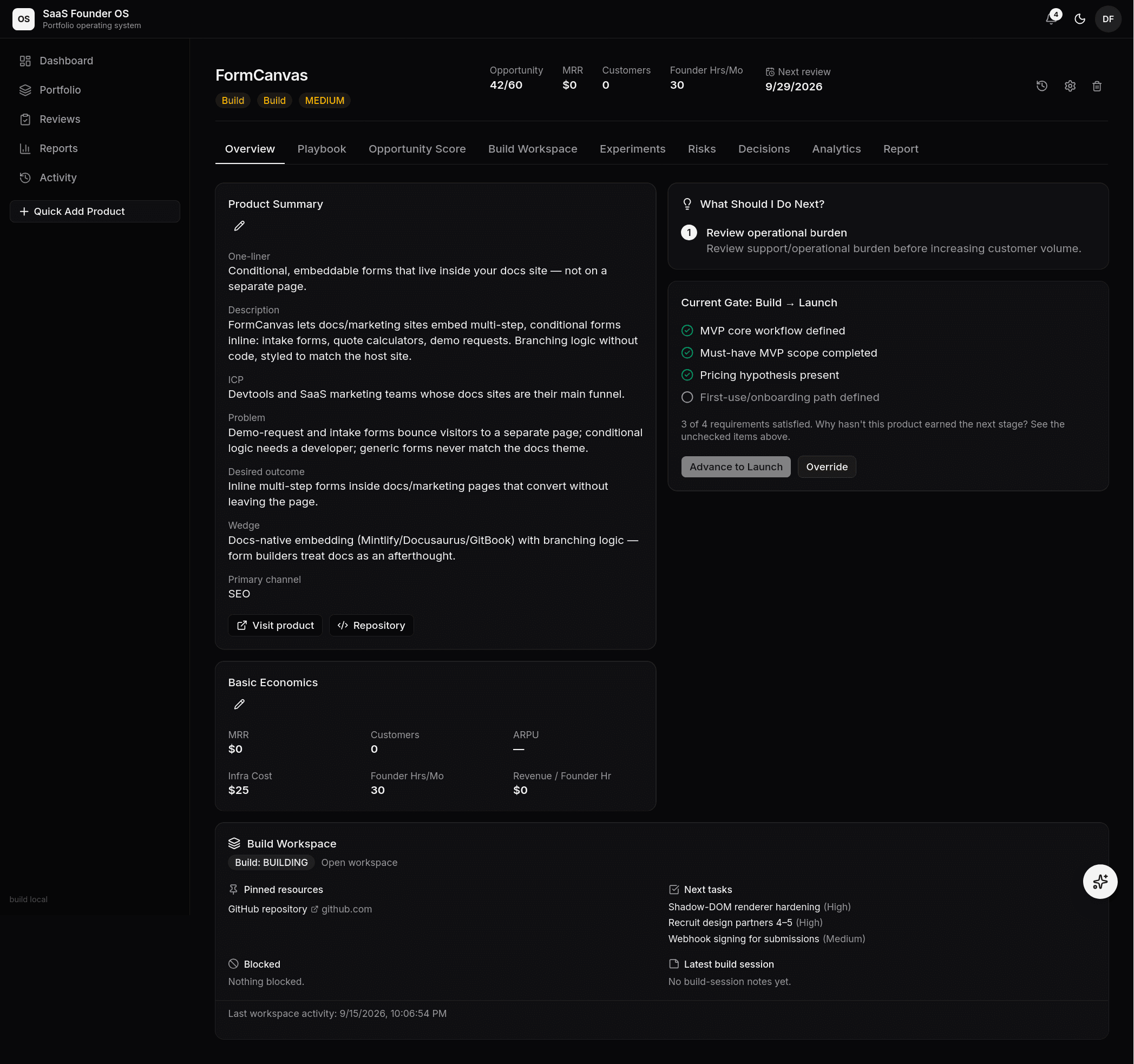 A gate in progress — three of four requirements satisfied, so "Advance"
stays disabled until the last piece of evidence exists (or you record an
explicit override).
A gate in progress — three of four requirements satisfied, so "Advance"
stays disabled until the last piece of evidence exists (or you record an
explicit override).
The next-action engine
Underneath the gates sits a deterministic engine that prioritizes 1–5 concrete next actions per product — which experiment to run, which evidence to collect next — based on the current stage and missing gate requirements. If you ever open the app and don't know what to do, the next-action engine is the answer.