

Kill it with dignity
Founder Playbook · KILL stage. The rationale record, why kills count as wins, and how reading your kill history makes you better at picking.
KILL is the stage the whole system exists to make possible. Every other stage is easy to find advice about; almost nothing teaches the exit. And yet the kill decision is the single highest-leverage move available to a founder with a portfolio: one honest kill returns hundreds of hours to the products that can compound.
Kills count as wins
Reframe first, because the culture won't help you: killing a product that the evidence condemned is not failure — it's the system working. The founder who kills on evidence keeps their hours, their attention, and their reputation for follow-through. The founder who keeps everything "alive" hasn't avoided failure; they've distributed it across a portfolio of zombies. A well-reasoned kill is the most valuable entry in your entire decision history.
The rationale record
A kill is only worth what its rationale is worth. Before archiving, write:
- What we believed — the hypothesis, in one sentence.
- What the evidence showed — experiments run, numbers hit or missed, what the market actually said.
- What it cost — months, money, and what you'd budget differently.
- What it taught — the transferable lesson. Almost always there.
This record converts a loss into an asset: it's how you get better at picking, which is the meta-skill the whole portfolio runs on.
Reading your kill history
The uncomfortable, high-value habit: reread old kills before making new bets. Patterns show up fast — the same distribution mistake across three products, a recurring overestimate of demand, a type of customer you can never reach. Your kill history is the honest map of your blind spots, and it's only available if you had the discipline to write entries down.
And once in a while, the history says something surprising: the killed idea keeps being validated by the market after you left. That's not a reason for guilt — it's evidence your timing was the problem, and now the revival condition may finally be true.
Where the OS enforces this
- The KILL decision requires a written rationale — the record above, structured and permanent.
- The decision timeline keeps the whole story visible: every gate, every experiment, every override that led here.
- Portfolio reviews keep kills on the menu at every review — an option that never expires from neglect.
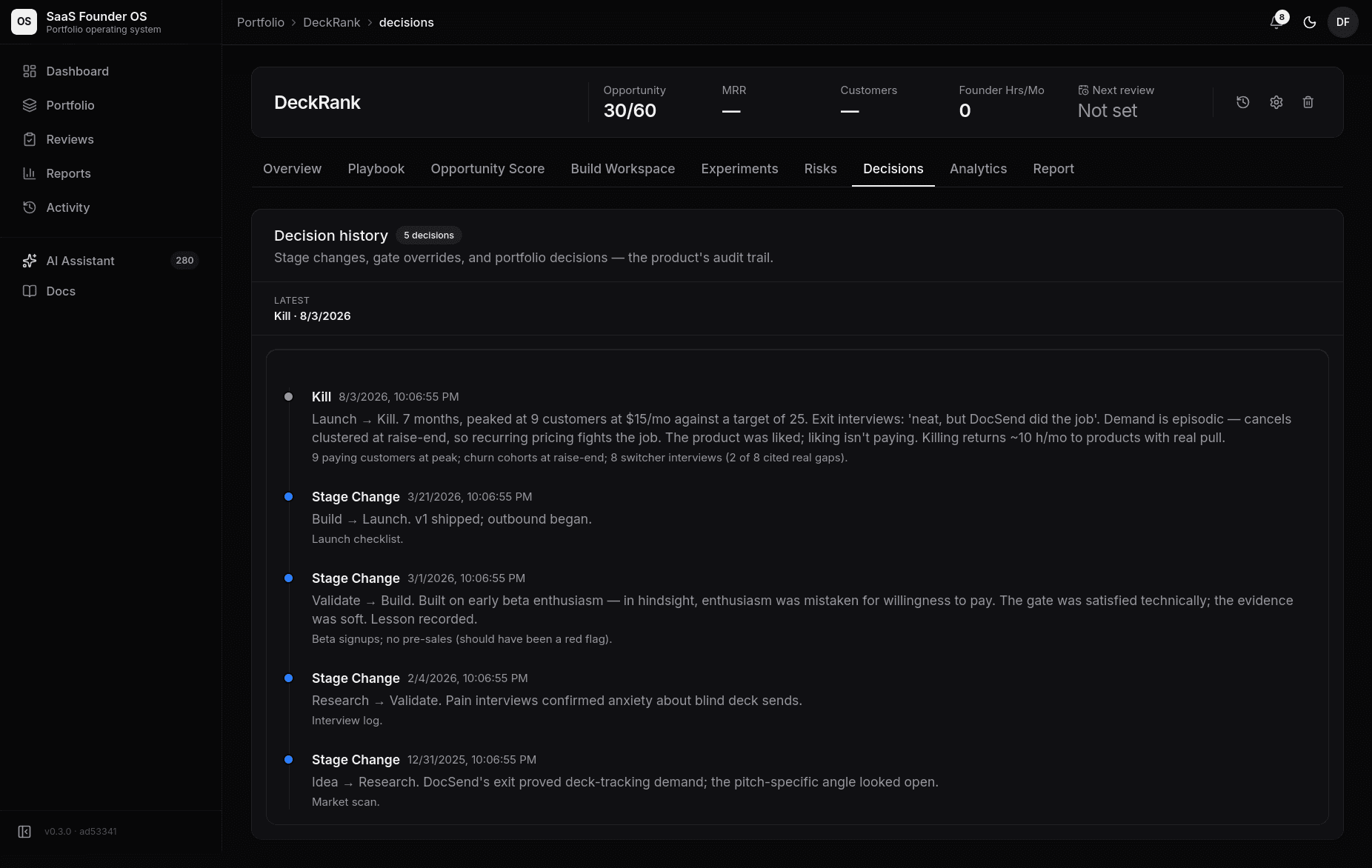 A kill with its evidence on the record. The rationale cites what the
product taught — and the hours it gives back. This entry is the system
working.
A kill with its evidence on the record. The rationale cites what the
product taught — and the hours it gives back. This entry is the system
working.
Back to the playbook index — or put a product on the record in Your first hour.